2026 Environment | The Amplification of War & Lasting Effects on Commerce

Main Takeaway Points
This war is an amplifier of pre-existing global trade problems, not their origin. The energy crisis it triggered exposed structural weaknesses that were already building.
A physical crude and energy shortage exists. Global reserves have been drawn down to cover a 1.3 billion barrel gap accumulated over the course of the conflict.
Multiple problems emerged from this single event: Iran's leverage strategy, the energy shortage, fractured supply chains, broken commerce mechanics, and a multi-polar hedge against U.S. hegemony.
Consequences create a paradox for U.S. national security, debt, and the dollar, compounded by a cycle of unstable peace and conflicting stakeholder interests.
Three directions remain possible: a golden age, a stalemate, or a collapse. None are guaranteed, and none are impossible.
As a result, SMEs will fall into one of four categories: thriving, surviving, at-risk, or distressed.
Every problem created by this conflict opens a corresponding opportunity for someone else. That opportunity goes to whoever can see it, prepare for it, and execute on it.
Opportunity flows toward prepared alternatives the moment disruption hits. Unprepared competitors forfeit demand, and that demand has to go somewhere.
The businesses capturing these opportunities share three traits: awareness of their actual situation, clarity in how they prepare, and discipline in how they deploy resources strategically.
SMEs who understand how to leverage cash and credit wisely are positioned to capture excess demand and reinforce their infrastructure faster than competitors still operating reactively.
Organizations with strong or actively developing asymmetrical networks across buyers, suppliers, and capital hold a structural advantage in access that compounds the longer this environment persists.
Core frameworks for positioning are threefold: stabilize operational rhythm with a liquidity buffer, hedge critical inventory, and reinforce infrastructure to capture demand.

Table of Content
Executive Overview
Section I | The War & Problems Created
Section II | Consequences & Possible Scenarios
Section III | Effect on Commerce
Section IV | Positioning For Businesses
Conclusion
About Eieyani Capital Associates
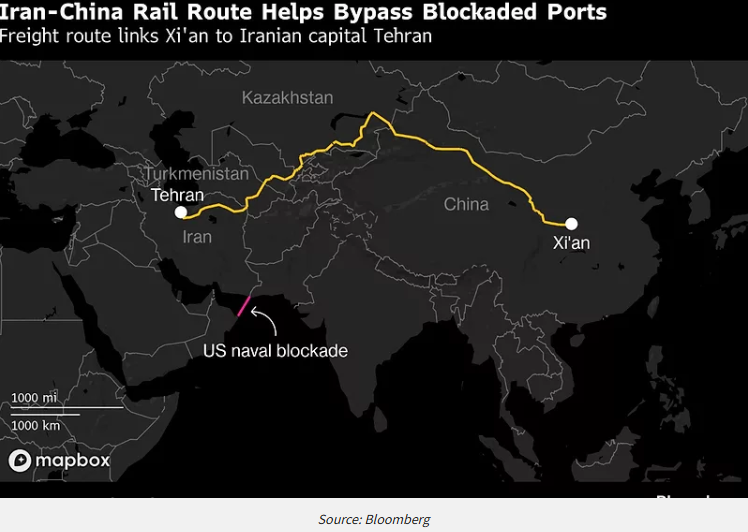
References
Disclaimer
Executive Overview
The war in Iran did not create the structural problems facing the global economy in 2026. It amplified them.
Energy shocks, fractured supply chains, and eroding institutional trust were already pressuring the world's commercial foundations before the first strike landed on February 28th. [1] This conflict accelerated that decay and compressed years of slow-moving risk into a single, violent convergence point.
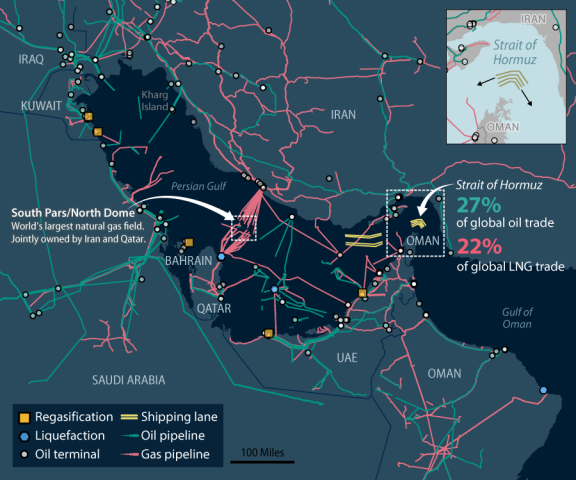
The closure of the Strait of Hormuz cut off 20% of the world's crude and LNG exports overnight. [2] Even with a performance-based memorandum of understanding now in place between Washington and Tehran, the physical damage to refineries, storage terminals, and shipping insurance markets cannot be undone by a signature. [3]
Reconstruction alone will take years. Trust, once broken at this scale, takes longer.
This is the central truth a business owner needs to internalize. A declared peace does not mean a return to normal operating conditions. [4] The lag between diplomatic headlines and on-the-ground recovery is where most unprepared operators get hurt, because they assume the crisis ends the moment the news cycle moves on.
This report is not designed to generate fear.
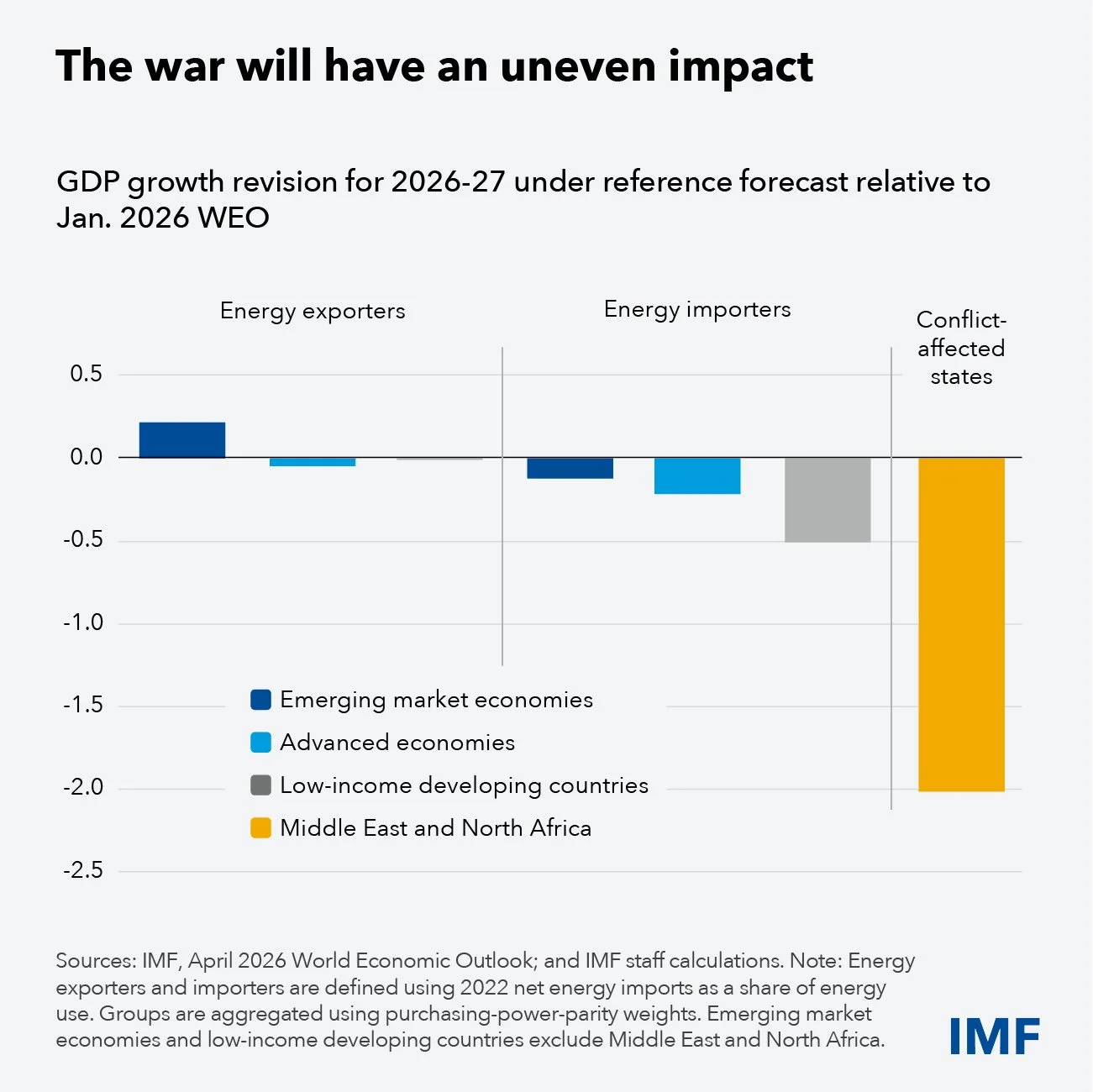
It is designed to show you the actual mechanics of how this conflict ripples through commerce, so you understand why elevated costs, supply delays, and strained buyer-seller relationships are likely to persist well past any formal ceasefire. [5]
Once you see the structure clearly, the path forward becomes a matter of preparation rather than panic.
There is real opportunity in this environment for the operators who position themselves correctly. But that opportunity only reveals itself once you understand the truth of what is actually happening.
This report below exists to give you that clarity.
Section I | The War & Problems Created
Problem I | The Conflict & Iran's Leverage
On February 28, 2026, the United States and Israel launched Operation Epic Fury against the Iranian regime. [5] A strike that destroyed Iran's conventional military within 72 hours but triggered the closure of the Strait of Hormuz in retaliation. [6] Iran's strategy from that point forward has rested on a single structural truth: a weaker military can still hold a superpower hostage if it controls a chokepoint the global economy cannot survive losing. [7] Iran has leaned on two assets to make this work. The first is asymmetric warfare, where mass-produced drones and missiles costing a few thousand dollars force the U.S. Navy to expend interceptors costing millions, and intelligence estimates suggest 40-60% of Iran's drone and missile inventory remains hidden in mountain bunkers untouched by the initial strikes. The second is terrain, since Iran's mountainous interior shields the IRGC's command infrastructure in ways that flat desert states like Saudi Arabia or the UAE simply cannot replicate. As of June 20, 2026, a memorandum of understanding exists between Washington and Tehran, but it is performance-based, meaning the economic blockade stays in place until Iran proves it has dismantled its nuclear program, and the two sides are publicly describing the same agreement in nearly opposite terms to their own populations. [8]
Problem II | The Physical Energy Shortfall
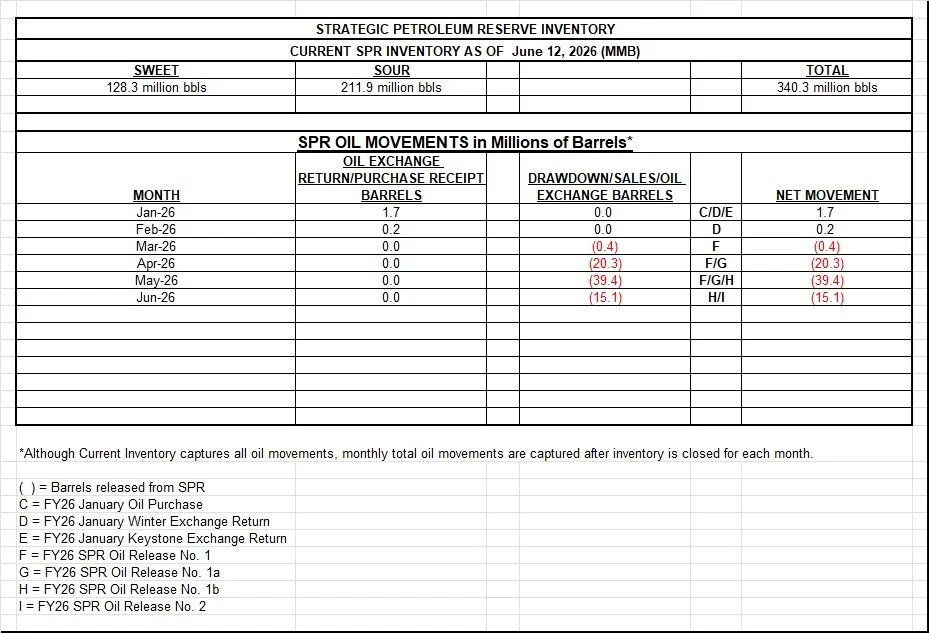
Before the war, the Strait of Hormuz moved roughly 20 million barrels per day. [2] Even with rerouted pipelines through Saudi Arabia and the UAE and a covert U.S. operation that extracted 100 million barrels via tankers with their transponders switched off, the global market has absorbed a 13 million barrel per day shortfall for over 100 days, a cumulative gap of 1.15 billion barrels that no single nation's reserves were built to cover. [9] The U.S. Strategic Petroleum Reserve has dropped to its lowest level in decades, with most analysts noting that the bulk of what remains is physically locked in pipeline infrastructure and cannot actually be pumped out without risking mechanical failure. [10] China entered this crisis holding the largest reserve on earth, but even Beijing is rationing its drawdown and warning it will need to re-enter global markets the moment its commercial stockpiles run dry. The International Energy Agency's emergency release of 400 million barrels expires July 9th, and if the Strait has not reopened in full by then, the world loses its last remaining buffer at the exact moment supply was already strained to its limit. [11]
Problem III | Supply Chains Under Siege
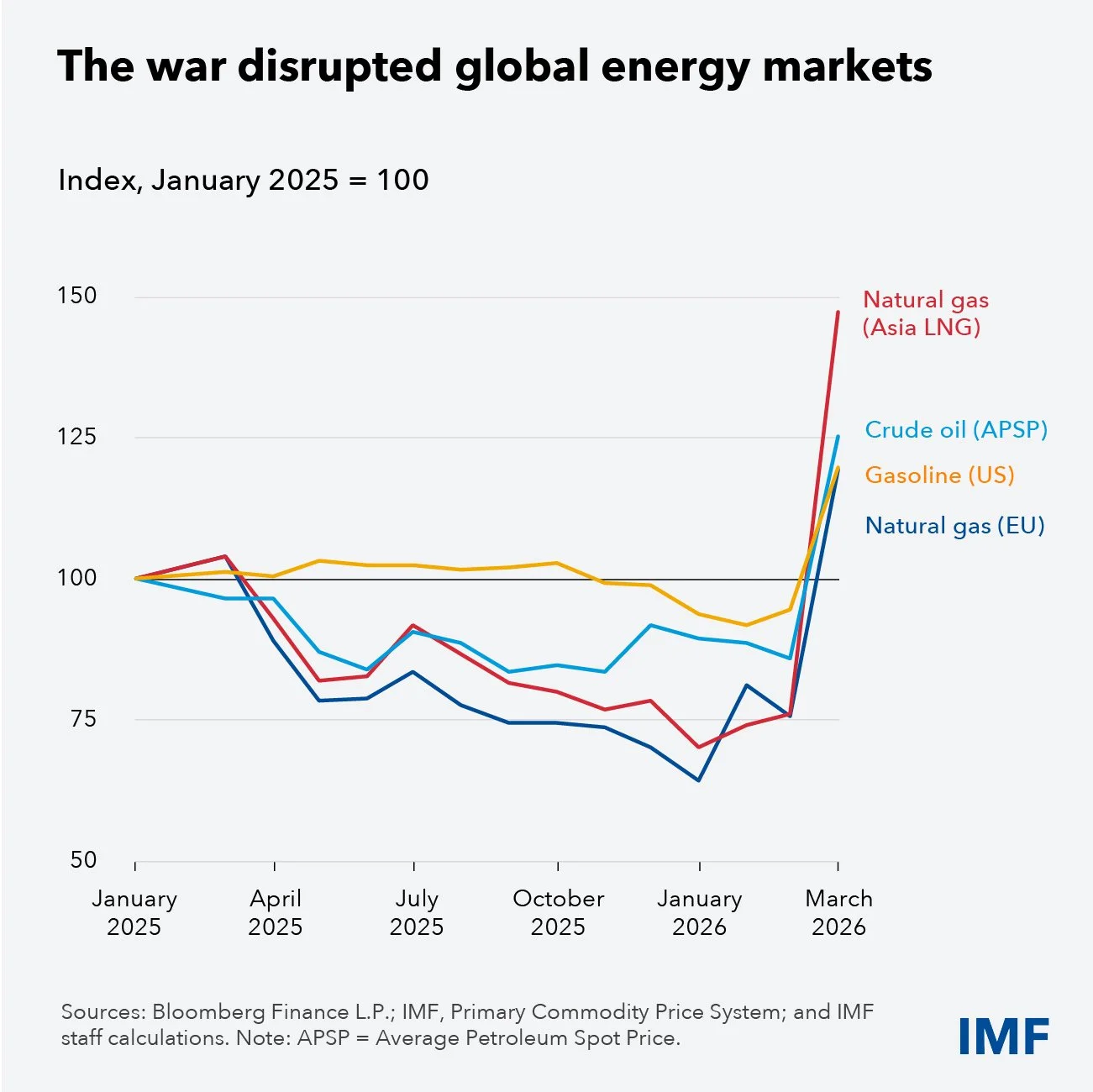
The deeper danger sits inside the global supply chain's reliance on Just-In-Time logistics, a system built on the assumption that energy and components will always arrive exactly when needed, with almost no slack built in to absorb a shock of this scale. [12] When Asian refineries are rationed to a fraction of their normal output, the foundational chemical inputs for plastics, fertilizers, and specialty metals dry up. The damage does not stay contained to the Middle East. In 2025, a single Ford factory was paused entirely because it could not source Chinese magnets needed for basic interior electronics, a preview of what happens when even one sub-component vanishes from a global assembly chain. [13] China's decision to halt sulphuric acid exports in May 2026, a chemical that feeds 60% of global fertilizer production and underpins copper, nickel, and semiconductor processing, shows a single state-level decision to preserve internal supply chains due to energy concerns. This can cascade into shortages across industries that have nothing to do with oil directly. [14] Beneath this physical reality sits a parallel financial threat, because nearly 4 million oil futures contracts are priced on the assumption of a peace deal that has not yet materialized, and when those contracts come due against a physical market that cannot deliver the specific medium-sour crude they require, the resulting price snap could push oil toward $200 a barrel and trigger liquidation events that ripple through pension funds and institutional portfolios far beyond the energy sector. [15]
Problem IV | The Maritime & Domestic Fracture
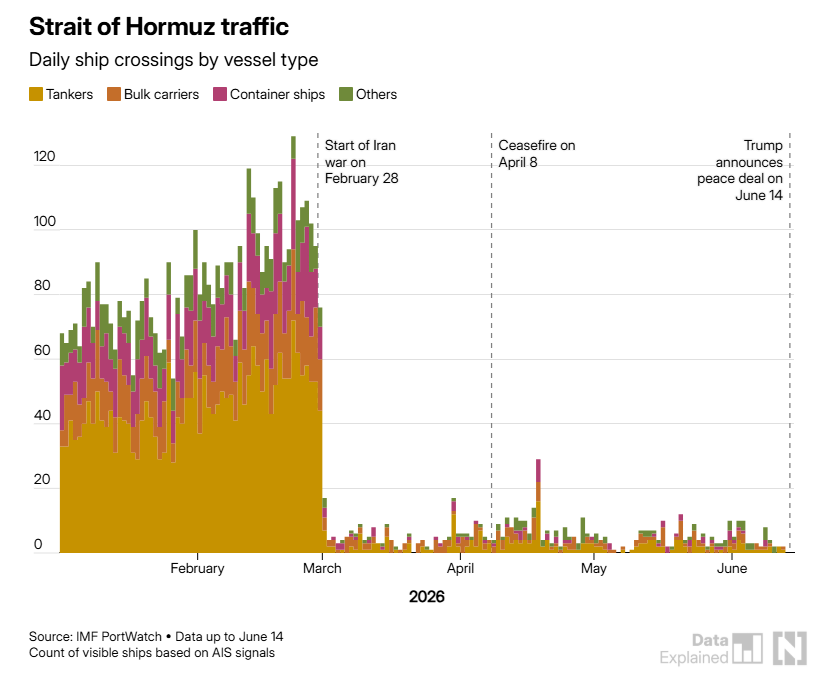
Moving goods at all has become structurally more expensive, since war-risk insurance premiums on Gulf shipping have surged roughly 4,000 times their pre-war baseline. [16] The U.S. government had to step in with a $40 billion reinsurance facility just to keep private maritime insurers from abandoning the region entirely. [17] Also, rerouting around the Cape of Good Hope to avoid Houthi attacks in the Red Sea adds 10-15 days to every voyage, and that delay alone has pushed container freight rates up 51-75% on major global routes. [18] Back home, this war has never received clean congressional approval. [19] The administration has relied on a legal technicality involving the War Powers Resolution to keep operations running past the standard 60-day limit, leaving Congress deadlocked roughly 50/50 on whether to continue. [6] The actual weight of this stalemate lands on small and mid-sized businesses, who absorb inflated input costs and timing delays while larger institutions and public markets remain largely insulated from the day-to-day reality on Main Street. [20]
Problem V | The Multi-Polar Fault Line
This conflict has exposed the limits of American military hegemony in ways that go beyond the battlefield. Defense planners worldwide are studying how a nation with a fraction of America's conventional power can still inflict sustained economic damage, and China and Russia have read that lesson clearly, vetoing UN resolutions against Iran. [21] Also, they’ve been supplying the regime with components and infrastructure support through a rail corridor connecting Xi'an to Tehran and other routes. [22] Iran's push to settle Strait of Hormuz transit fees in Chinese yuan rather than U.S. dollars is a direct challenge to the petrodollar system that has anchored American financial dominance since the 1970s. [23] Tehran's request that China and Russia serve as formal security guarantors in any peace deal would, if granted, end fifty years of unchallenged U.S. military authority over Middle Eastern stability. [24] Peace remains difficult to lock in because the actors involved are not playing by the same rulebook. Iran's ruling hardliners answer to a Shia theological doctrine that frames national suffering as a precursor to the return of their Messiah, a belief system that makes economic strangulation far less persuasive than Western policymakers assume. [25]
That same leadership has studied Libya's fate closely, having watched a regime that voluntarily surrendered its nuclear program get toppled less than a decade later, a lesson that hardens their resolve to keep their own program intact. Israel, meanwhile, is excluded from the current memorandum entirely and continues active strikes against Hezbollah in Lebanon, making it the single most unpredictable actor on the board and a clear signal that even a signed peace agreement between Washington and Tehran does not mean the broader region goes quiet.
Section II | Consequences & Possible Future Scenarios
Consequence I | The Washington Paradox
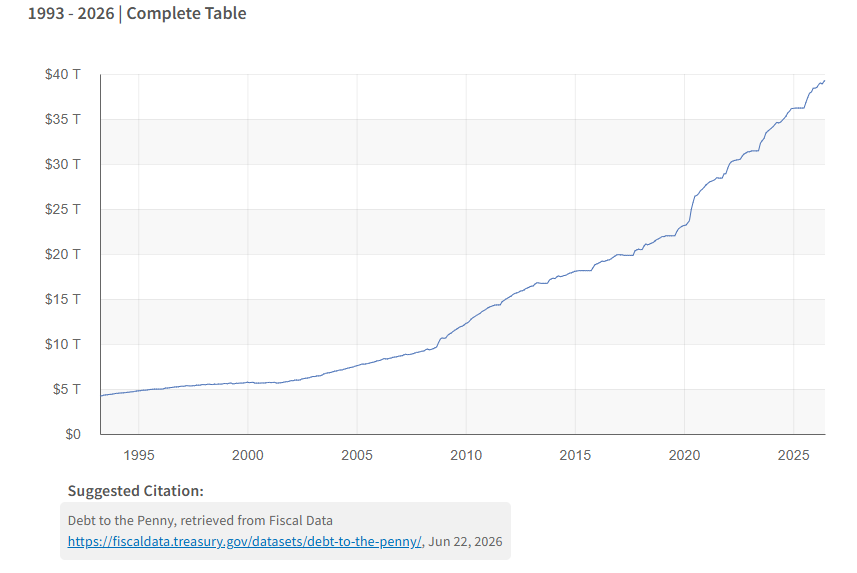
The United States is locked into a position it cannot easily exit. Washington needs Iran to fully surrender its nuclear enrichment program to declare a real victory, but that demand asks Tehran's hardliners to give up the one asset that gives them leverage at all. A compromise would likely require lifting sanctions, withdrawing U.S. forces from the region, and accepting China and Russia as security guarantors. These terms would shatter America's fifty-year monopoly on Middle Eastern security. This is not a problem the U.S. military can solve through firepower alone, because the country's near $40 trillion debt load and the credibility of the petrodollar system depend on this conflict resolving in a way that does not weaken either one. [26] Iran's hardliners are willing to absorb far more civilizational pain than a typical adversary because their worldview treats suffering as meaningful rather than something to be avoided. [25]
Consequence II | The Liquidity Mechanism
Nearly 4 million oil futures contracts are currently priced against the assumption that peace arrives before they expire, and that assumption is creating a dangerous gap between paper prices sitting near $80 a barrel and physical pricing closer to $140 without peace and scarcity. [27] When those contracts hit their settlement date, speculators holding the wrong position will be forced to either find physical medium-sour crude that does not exist in sufficient supply or get liquidated outright, and the math on this is not small. Since a snap from $100 to $200 a barrel could trigger a $450 billion capital shift in under 48 hours. Refineries cannot process oil at $200 and sell gasoline at normal retail prices without losing money on every gallon due to demand destruction. So, a price spike of this scale would force shutdowns and rationing rather than simply higher prices at the pump.
Consequence III | The Supply Chain Endgame
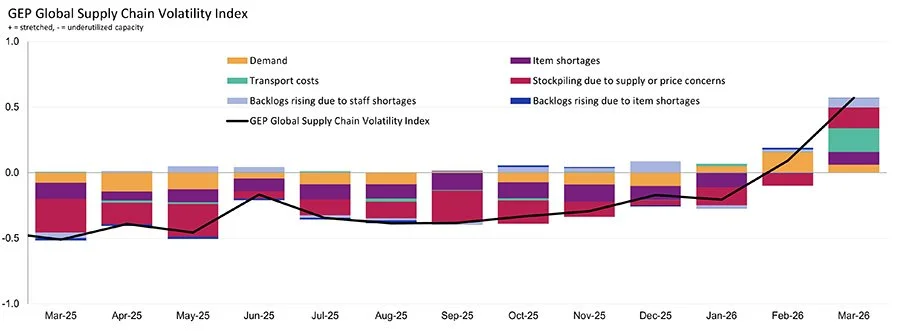
Even in a best-case peace scenario, the physical infrastructure needed to move oil, refine it, and distribute downstream chemicals cannot snap back to normal in days or weeks. Damaged Gulf refineries need years of repair. [28] The global supply chain's reliance on tightly timed deliveries means that one missing component, whether it is a five-cent resistor or a specialty chemical reagent, can stall an entire production line regardless of how strong the rest of that company's supply chain looks. This is the lesson Western manufacturers are relearning in real time, since the most expensive parts are rarely the ones causing the actual shutdown. [12]
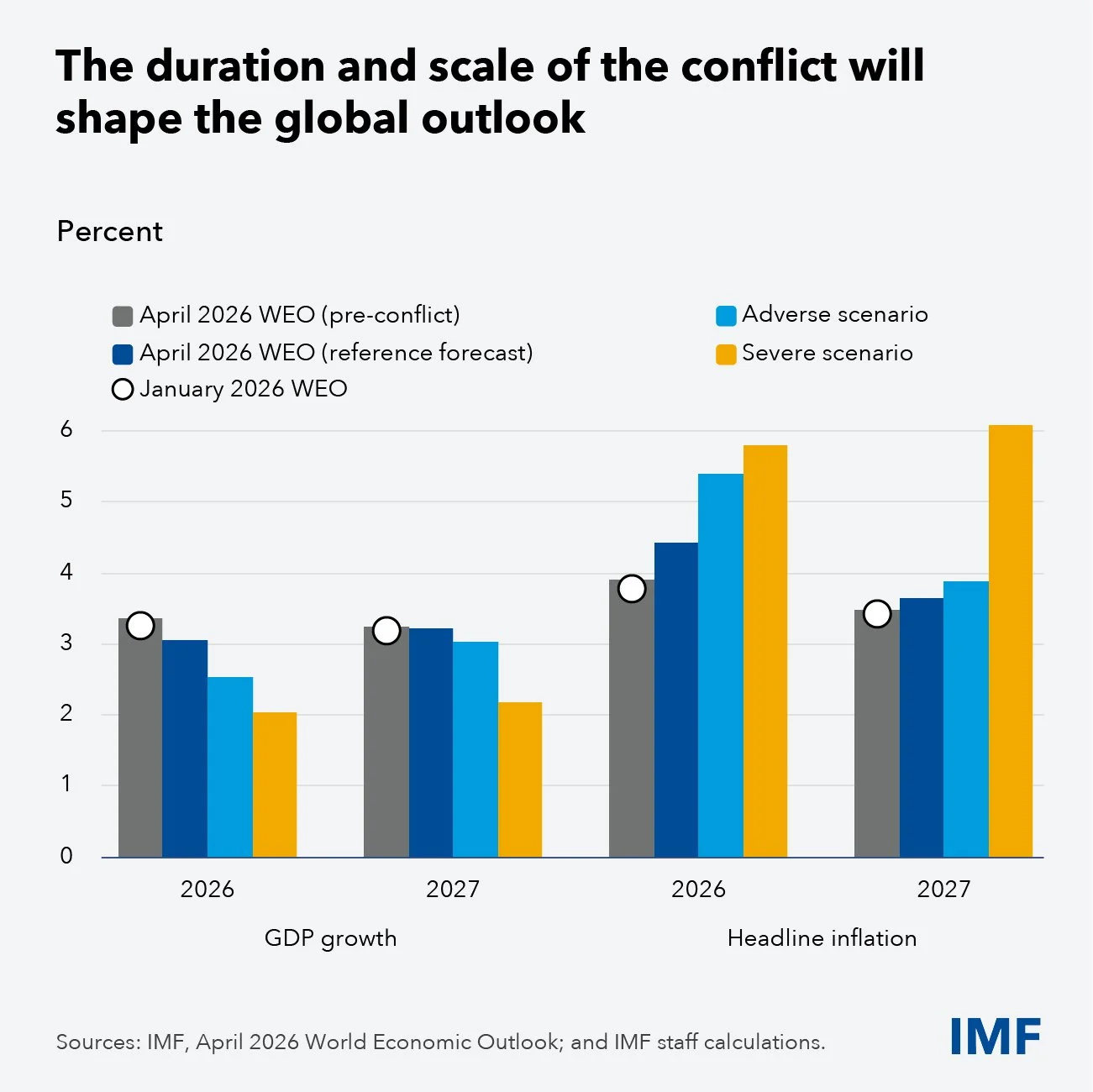
Consequence IV | Cost of Living Transmission
Rising input costs do not arrive evenly or all at once. A refinery in Saudi Arabia pausing nitrogen production for fertilizer does not hit a farmer's wallet immediately, but it moves through distributors, alternative suppliers forced to raise their own prices, and eventually lands on regional businesses and consumers as a cost increase that feels sudden even though it was building for months. The businesses and households most exposed to this transmission are the ones whose supply chains touch the global system most directly, while companies running on tightly domestic, insulated inputs absorb far less of the shock. [9]

Consequence V | All Roads Lead to Beijing
China holds the actual key to how long this conflict drags on, because Iran's drone and missile production depends heavily on Chinese influence. Components, satellite data sharing, and a rail logistics corridor that the U.S. cannot bomb without risking a separate economic war over rare earth metals. [29] Beijing entered this crisis with the largest oil reserve on the planet, giving it roughly three to four months of runway before its own industrial base feels real pain. [30] That timeline matters because Washington's broader strategy, including new legislation designed to digitize U.S. debt and force global trade through American-controlled financial rails, depends on eventually cutting off China's ability to keep Iran supplied. Until that pressure point is reached, China has every incentive to keep Iran in the fight as a way of testing and exhausting American military and financial resources at a distance. [31]
Possible Future Timelines
Timeline I | The Golden Age Scenario
In this outcome, internal pressure inside Iran builds to the point where civilian leadership sidelines the hardliners, the nuclear program is fully surrendered, and the Strait reopens without further incident. Sanctions lift, frozen assets return, and foreign investment floods back into the region within twelve months. Washington uses this win to secure a parallel deal with Beijing, trading non-interference in Latin America for China backing off its support of Iran, and the U.S. follows through on digitizing its debt through new financial legislation that forces global trade to route through American-controlled rails. [32] Effectively solving its debt crisis on the backs of the rest of the world while triggering a domestic manufacturing and reshoring boom. [33]
Timeline II | The Stalemate Scenario
Here, Iran's hardliners sabotage the peace process, using the negotiation window to restock weapons and prepare for a longer fight while still avoiding a unilateral break with Beijing and Moscow. The Strait reopens on paper, but Iran quietly imposes extortion-style security fees on shipping companies. [34] This leaves Washington stuck between escalating military action that risks reigniting the closure entirely or quietly accepting the toll and admitting its hegemony has limits. The result is a prolonged stagflation environment, with elevated prices, persistent shortages, and rising domestic instability, while the digital debt strategy stalls out because it was built to work in a fully secured trade environment that never materializes.
Timeline III | The Collapse Scenario
In the worst case, Iran rejects the peace framework outright, China and Russia double down on support, and the United States escalates with broader economic retaliation against Beijing. The resulting trade war and prolonged Strait closure trigger a liquidity crisis as the Gulf monarchies are forced to liquidate U.S. public equity holdings to fund their own survival. A disruption the Federal Reserve cannot fully backstop given the existing debt load. The fallout includes layoffs, foreclosures, and bank stress at home severe enough to force Washington to choose between domestic stabilization and continued global military commitments, with a prolonged regional war or even a wider conflict remaining on the table as a last resort. [35]

Section III | Effect on Commerce
Group I | Thriving
The businesses positioned to thrive through this environment share a common profile. They hold liquidity buffers and inventory reserves sufficient to absorb shipping delays without panic, and have already mapped their supply chain down to the sub-component level. They maintain real relationships across buyer networks, supplier networks, and capital networks rather than relying on a single point of contact for any of the three. When a competitor defaults on a contract because their supply chain froze or their cash ran out mid-delay, these are the companies positioned to absorb that displaced demand immediately, often at better margins than they were earning before the crisis began. Their advantage is the structural result of treating preparation as a discipline. It gives them the option to acquire distressed assets, share infrastructure with weaker competitors at a profit, or simply outlast the chaos while everyone else is reacting.
Group II | Surviving
Most fundamentally strong businesses fall into this category, and the defining trait here is not weakness but a lack of resources to hedge everything at once. These operators are honest with themselves about what they do not know and are actively trying to map their exposure. They are taking real steps to plug the most dangerous gaps even though they cannot stock months of inventory the way a thriving competitor can. Their core vulnerability is cash flow timing rather than profitability itself, since a thirty or sixty day payment delay from a major buyer can strain a company that is fully solvent on paper. The sudden short on the liquidity needed to make payroll in real time creates unintended disruptions. The companies that move from surviving to thriving are the ones who treat this moment as the time to build their three core networks, buyers, suppliers, and capital, rather than waiting until a crisis forces the relationship to be built under pressure.
Group III | At Risk
At-risk companies are not poorly run businesses. They are strong companies that simply lack a playbook for this specific kind of disruption. The absence of that playbook has left them in pure reaction mode for long enough that the cumulative damage is starting to compound. The core threat here is a cash flow squeeze hitting from both directions at once, where a buyer delays payment by thirty days while a supplier simultaneously demands faster payment or raises prices. The business has no choice but to absorb both pressures with savings that were never built to withstand a sustained, multi-front squeeze. The path back to stability starts with the same clarity exercise that defines the surviving tier, mapping the actual exposure, auditing the supply chain, and identifying exactly where the next thirty to sixty day delay would hurt most, because once that clarity exists, the response stops being reactive and starts being deliberate.
Group IV | Distressed
Distress in this environment is rarely a story of bad management. It is almost always a story of a fundamentally sound business getting hit by three or more external shocks in close succession. For example a buyer extending payment terms at the same moment a supplier raises prices and a fourth disruption pulls the floor out entirely. By the time leadership realizes the pattern, cash reserves are gone, expensive short-term financing has been used to patch the bleeding, and the business is operating under the kind of stress that makes clear thinking genuinely difficult. The first move for a distressed company is never more capital, since capital without a structural fix simply accelerates the same bleed at a higher interest rate. The real fix starts with an honest audit of what changed and a restructuring built around fulfilling the demand that remains. In most cases, the underlying business is salvageable and their model was fine. They just didn’t adapt fast enough.
The Balanced Picture
Every threat vector described in this report cuts two ways. Unprepared competitors forfeiting demand is a negative for them and a direct opportunity for whoever is positioned to absorb it. Distressed assets coming up for sale at a discount is painful for the seller and a genuine opening for the buyer with the capital and patience to move on it. Government contracts expanding to stimulate the economy creates real revenue for operators willing to clear the compliance bar to access it. On the other side, higher input costs, inconsistent cash flow, and strained buyer-seller trust are the structural realities every business in this environment has to manage regardless of how prepared they are. The businesses that come through this period strongest are not the ones who avoid these pressures entirely, because no one fully avoids them. They are the ones who understand the mechanics well enough to position for the upside while the rest of the market is still reacting to the downside.

Section IV | Positioning For Businesses
Cash v. Credit Framework Overview
The choice between funding your defense with cash or with credit is not a question with one right answer. It depends entirely on your strategy and your current cash flow strength. A business that mismanages its cash will eventually lose to a business that knows how to leverage credit responsibly, and a business that over-leverages its credit will eventually lose to a business that protects its cash with discipline. Cash gives you total freedom to deploy capital without interest or covenants, but every dollar spent is a dollar you cannot recover if a second disruption hits while you are already spread thin. Credit, when structured against a stable cash flow, gives you a buffer you can recycle every time a delay or shock occurs, absorbing the hit without draining your own reserves. Though, it comes with the cost of interest and the real consequence of default if the deal is poorly structured. The businesses navigating this environment well are not choosing one tool over the other. They are matching the right tool to the right moment, using cash where they have abundance and credit where they have strategy.
Due to increased risk and regulations, banks have decreased lending. Hence, private credit networks become increasingly more valuable. However, most credit networks in the small-to-medium enterprise arena are either tied to white-labelled lenders backed by banks or, worse, merchant cash advances disguised as private credit. True private credit exists for SMEs, although rare, access to intermediaries and dealmakers with these capital networks becomes a strategic advantage.
Framework I | Operational Rhythm & Liquidity Buffer
The first framework exists to protect a business against the exact disruption most companies are facing right now, the timing gap created when a buyer delays payment or a supplier demands cash up front. This gap forces a business to keep paying its fixed costs, payroll, rent, and recurring overhead, while revenue is delayed. The company that has not prepared for this gap ends up burning its own savings just to survive a delay it had no control over. The solution is building a liquidity buffer, either through disciplined cash reserves or a recyclable credit facility sized specifically to absorb these gaps. Hence, when a thirty or sixty day delay hits, the business has a clean mechanism to bridge the timing without panic. The math behind this is not complicated. It requires knowing exactly how much a delay costs you per month and matching that number against a buffer big enough to survive two or three consecutive disruptions without breaking your operating rhythm.
Framework II | Inventory Hedging & Fulfillment Stability
The second framework exists because the real danger in a fractured supply chain is rarely the materials sourced domestically. It is the materials sourced overseas that touches global supply chains currently under strain. A single missing three dollar electronic component can halt a piece of equipment worth thousands just as completely as a missing engine or steel shell. The businesses getting blindsided right now are the ones who never mapped which small, cheap, seemingly unimportant parts actually hold veto power over their entire fulfillment chain. The fix is not stocking up on everything, since most businesses do not have unlimited capital to hedge their full supply chain. It is identifying the specific components most exposed to this disruption and building a targeted reserve around those, using either cash or a credit facility deployed with precision rather than panic.
Framework III | Reinforcing Infrastructure & New Demand Capture
The third framework matters because defense alone is a losing strategy in an environment where demand is actively opening up for whoever is ready to capture it. A business that has stabilized its cash flow and hedged its critical inventory still needs the internal infrastructure, whether that is staffing, compliance readiness, or operational capacity, to actually take on new demand. New buyers, new contracts, or new government work must be fulfilled properly without breaking under the weight of the volume. Signaling that readiness to the right buyer networks and centers of influence is what turns a defensive position into genuine market share growth, because the businesses failing to adapt right now will eventually need to send their demand somewhere, and the operators who built this infrastructure ahead of time are the ones who receive it.
Putting the Frameworks to Work
The way these frameworks play out depends entirely on the type of business applying them.
A clothing retailer dealing with inconsistent foot traffic and a delayed shipment from an overseas supplier needs the operational rhythm framework to bridge the cash gap while they renegotiate or find an alternative source.
A logistics fleet operator squeezed by rising fuel costs and a buyer who just pushed payment terms from thirty to sixty days needs that same buffer to keep trucks running and avoid factoring away their margin out of desperation.
A precision manufacturer holding a near-complete piece of equipment that cannot ship because one overseas electronic component is stuck in an energy rationed factory. They need the inventory hedging framework applied with real precision, through identifying that exact component and securing a backup source before the next contract is at risk.
A government cybersecurity contractor facing a new compliance mandate that could freeze their billing entirely needs the infrastructure framework to fund that transition before their contract gets reassigned to a competitor who moved faster.
None of these businesses are weak. They are simply facing the same structural pressure expressed differently inside their own vertical, and the framework that applies depends on where the pressure is actually landing.

Conclusion
This conflict did not invent the pressures facing your business. It amplified problems that were already building, compressing years of slow-moving risk into a single, volatile window. The truth worth holding onto is simple. A signed peace agreement does not mean a fast return to normal, and the businesses that understand this timeline clearly are the ones who avoid getting blindsided by a recovery that takes far longer than the headlines suggest.
This is not the end of the world, and it is not meant to scare you. Every disruption described in this report creates an equal and opposite opportunity for the operator who is prepared to see it. The businesses coming through this period strongest are not avoiding the pressure entirely, since no one fully escapes it. They are the ones who understand the mechanics well enough to build their networks, protect their cash flow, and position themselves before the next shock lands rather than after.

About Eieyani Capital Associates
Eieyani Capital Associates is a boutique finance brokerage connecting businesses and capital sources to the right structures at the right time.
For businesses, we bring market intelligence, situational strategy, and access to capital facilities aligned to operational goals. Every engagement is built around both the capital and the structural clarity to deploy it effectively. For capital sources, we deliver prepared deal flow with the operational context and deployment strategy already engineered.
We act as the orchestrator between risk, opportunity, and capital for all stakeholders within the transaction.
References
[1] Institute for Economics & Peace. (2026, June 8). The Hidden Price of the Iran War. Vision of Humanity.
https://www.visionofhumanity.org/the-hidden-price-of-the-iran-war/
[2] Congressional Research Service. (2026, March 11). Iran Conflict and the Strait of Hormuz: Impacts on Oil, Gas, and Other Commodities (CRS Report No. R45281). Congress.gov.
https://www.congress.gov/crs-product/R45281
[3] Middle East Council on Global Affairs. (2026, April 21). Iran War: Grappling With an Unprecedented Energy Crisis. Situation Assessment
https://mecouncil.org/publication/iran-war-grappling-with-an-unprecedented-energy-crisis/
[4] Arab Center Washington DC. (2026, June 17). The Full Text of the Memorandum of Understanding between the United States and Iran. Press Releases.
[5] International Monetary Fund. (2026, April 14). War Darkens Global Economic Outlook and Reshapes Policy Priorities. IMF Blog.
[6] U.S. Department of State. (2026, April 21). Operation Epic Fury and International Law. Office of the Legal Adviser.
[7] The Conversation. (2026, June 15). How Iran gained the strategic upper hand in the war with the US and Israel.
[8] NBC News. (2026, June 21). The U.S.-Iran negotiations have been chaotic. But the confusion has only grown since the agreement was signed. NBC News Politics.
[9] CNN. (2026, June 19). More than 1 billion barrels of oil have gone missing. CNN Business.
https://www.cnn.com/2026/06/19/business/oil-price-supply-inventories
[10] U.S. Department of Energy. (2026). Strategic Petroleum Reserve Quick Facts. Office of Petroleum Reserves.
https://www.energy.gov/hgeo/opr/spr-quick-facts
[11] International Energy Agency. (2026, March 11). IEA Member countries to carry out largest ever oil stock release amid market disruptions from Middle East conflict. IEA Newsroom.
[12] Oxford College of Procurement & Supply. (2026, June 4). How the Iran Conflict Is Disrupting Global Supply Chains. Procurement Insights.
[13] Ford Authority. (2025, May). Ford Explorer Production Temporarily Paused Over Rare Earth Magnet Shortage. Ford Authority Insights.
[14] Australian Broadcasting Corporation. (2026, May 17).China quietly turns off sulphuric acid supply amid disruption from Iran war. ABC News Rural.
https://www.abc.net.au/news/rural/2026-05-17/china-turns-off-sulphuric-acid-supply/106682704
[15] CME Group. (2026). Understanding Futures Expiration & Contract Roll. CME Group Education. https://www.cmegroup.com/education/courses/introduction-to-futures/understanding-futures-expiration-contract-roll
[16] National News. (2026, June 3). Ships face 4,000-times higher insurance costs to cross Strait of Hormuz. National News Business Economy.
https://www.thenationalnews.com/business/economy/2026/06/03/hormuz-shipping-trade-iran-war/
[17] Congressional Research Service. (2026, May 6). DFC Shipping Reinsurance Facility: Iran Conflict and Strait of Hormuz. (CRS Insight No. IN12688). Congress.gov.
https://www.congress.gov/crs-product/IN12688
[18] Suaid Global. (2026, April 5). Red Sea Shipping Crisis 2026: Impact on Your Supply Chain. Suaid Global Insights.
https://suaidglobal.com/insights/red-sea-shipping-crisis-2026/
[19] Office of Representative Emilia Sykes. (2026, May 1). Rep. Sykes: President Trump Has Now Exceeded 60-Day Limit for Iran War Without Congressional Approval. U.S. House of Representatives Press Releases.
[20] Associated Press. (2026, April 2). Iran war disrupts US small businesses with shipping complications and higher costs. AP News Business.
https://apnews.com/article/iran-war-small-business-shipping-800b30598735bd60b92baa95114a28ee
[21] United Nations. (2026, April 7). General Assembly Debates Strait of Hormuz Closure after China, Russian Federation Veto Security Council Draft Resolution Presented by Gulf States (UN Press Release GA/12758). UN Meetings Coverage and Press Releases.
https://press.un.org/en/2026/ga12758.doc.htm
[22] The Asia Cable. (2025, June 9). New Railway Connecting Iran & China Presents Opportunities & Challenges. Asian Cable Asian Affairs.
https://www.theasiacable.com/p/new-railway-connecting-iran-and-china
[23] Atlantic Council. (2026, March 30). Inside Tehran’s toll booth. Atlantic Council Dispatches.
https://www.atlanticcouncil.org/dispatches/inside-tehrans-toll-booth/
[24] Global Times. (2026, April 8). Iran envoy calls for security guarantee mechanism involving UN, China, Russia to stabilize Middle East. Global Times China Diplomacy.
https://www.globaltimes.cn/page/202604/1358458.shtml
[25] Iran International. (2026, March 26). The expected one: Shi'ite messiah animates and divides Islamic Republic. Iran International Insights.
https://www.iranintl.com/en/202503259224
[26] Deutsche Bank Research. (2026, March 24). What Iran means for the dollar: a perfect storm for the petrodollar. Deutsche Bank Featured Research.
[27] OilPrice.com. (2026, April 27). Warnings on Permanent Oil Demand Destruction Begin Pouring In. OilPrice Energy Reports.
[28] Center for International Relations and Sustainable Development. (2026). No Return To Normal: Why The Iran War Will Permanently Rewire Global Energy Flows. CIRSD Horizons Article.
[29] U.S.-China Economic and Security Review Commission. (2026, March 16). China-Iran Fact Sheet: A Short Primer on the Relationship. USCC Research Reports.
https://www.uscc.gov/research/china-iran-fact-sheet-short-primer-relationship
[30] EIA U.S. Energy Information Administration (EIA). (2026, April 20). China, the United States, and Japan hold most strategic oil inventories in 2025. In-Brief Analysis.
https://www.eia.gov/todayinenergy/detail.php?id=67504&utm_medium=email
[31] Institute for the Study of War. (2026, June 18). China & Taiwan Update, June 18, 2026. ISW China-Taiwan Update.
https://understandingwar.org/research/china-taiwan/china-taiwan-update-june-18-2026/
[32] The White House. (2026, May 19). INTEGRATING FINANCIAL TECHNOLOGY INNOVATION INTO REGULATORY FRAMEWORKS. Presidential Actions Executive Orders.
[33] Yahoo! Finance. (2025, September 8). Putin Advisor Accuses US of Using Crypto, Gold to Escape Massive Debt. Yahoo Finance World Business.
https://finance.yahoo.com/news/putin-advisor-accuses-us-using-214522644.html
[34] Geneva Solutions. (2026, June 18). Iran wants to charge ‘fees’ on Hormuz passage. What impacts could that have? Geneva Solutions Peace & Humanitarian News.
[35] American Enterprise Institute. (2025, July 28). Three Ways America’s World Order Could Collapse. AEI Op-Eds.
https://www.aei.org/op-eds/three-ways-americas-world-order-could-collapse/
Disclaimer
This document is provided solely for informational and educational purposes. It does not constitute financial, lending, legal, tax, investment, accounting, or professional advice of any kind, and must not be relied upon as such.
The information contained herein is based on publicly available sources believed to be reliable at the time of publication. Eieyani Capital Associates makes no representation or warranty, express or implied, as to the accuracy, completeness, or timeliness of any information herein. All information, opinions, estimates, and forward-looking statements are as of the date of publication and are subject to change without notice. The strategies, frameworks, scenarios, and examples described in this document are illustrative and general in nature. They do not account for your specific business circumstances, financial condition, credit profile, industry, or regulatory environment. All examples are hypothetical and provided for conceptual purposes only.
Nothing in this document establishes any client, advisory, broker, fiduciary, or agency relationship between the reader and Eieyani Capital Associates or any of its affiliates. Nothing herein constitutes a recommendation to enter into any financing, credit, or contractual arrangement, nor does it guarantee funding, approval, specific rates, terms, outcomes, or financial performance of any kind. All business, financial, and credit decisions involve risk. Readers are solely responsible for their own due diligence and are strongly encouraged to consult qualified, licensed professionals before acting on any information contained herein.
Eieyani Capital Associates and its affiliates expressly disclaim all liability for any direct, indirect, incidental, or consequential loss or damage arising from the use of, reliance on, or interpretation of this document or any portion thereof.
© 2026 Eieyani Capital Associates. All rights reserved. No part of this publication may be copied, reproduced, distributed, or transmitted in any form or by any means without the prior written permission of Eieyani Capital Associates.